
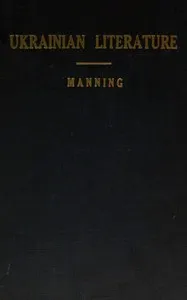
Ukrainian literature : $b Studies of the leading authors
- Language
- EN
- Format
- EPUB
- Size
- 355 KB
Description
Ukrainian literature by Clarence Augustus Manning is a literary history written in the mid-20th century. The work surveys how Ukrainian writing developed alongside the country’s turbulent history, emphasizing a persistent democratic ethos and sympathy for the common people. It charts the movement from medieval and folk foundations to a modern vernacular literature, focusing on key authors who shaped national identity and voice.
The opening of this study features a foreword comparing Ukrainians to the Irish in their long struggle and literary resurgence, praising the richness of folk-song and the timeliness of an accessible survey. The introduction argues that literature most clearly shows how centuries of domination molded Ukrainian life while preserving a democratic spirit, framing the modern era as beginning with Kotlyarevsky’s Eneida and a literature “of the common man.” The first chapter sketches the historical background from Kievan Rus and Byzantine influence through invasions, Polish-Lithuanian and Muscovite rule, church conflicts, the Cossack rise and suppression, partitions, and the east–west split, noting that Kyiv’s scholars revitalized Muscovy even as Ukraine’s educated class declined. Subsequent chapters briefly portray Hrihori Skovoroda as a wandering moral philosopher of inner freedom and dignity; Ivan Kotlyarevsky as founder of modern vernacular writing with a comic Eneida and early theater grounded in democratic feeling; and Hrihori Kvitka-Osnovyanenko as the first major prose writer whose sentimental village tales proved the language’s fitness despite conservative politics. The narrative then turns to Taras Shevchenko—his rise from serfdom through artistic patronage, the Kobzar and Haydamaky, activism, arrest and exile under Nicholas I, and poetry centered on Cossack memory and social suffering—before the excerpt breaks off amid his account of the Haydamaky. (This is an automatically generated summary.)
The opening of this study features a foreword comparing Ukrainians to the Irish in their long struggle and literary resurgence, praising the richness of folk-song and the timeliness of an accessible survey. The introduction argues that literature most clearly shows how centuries of domination molded Ukrainian life while preserving a democratic spirit, framing the modern era as beginning with Kotlyarevsky’s Eneida and a literature “of the common man.” The first chapter sketches the historical background from Kievan Rus and Byzantine influence through invasions, Polish-Lithuanian and Muscovite rule, church conflicts, the Cossack rise and suppression, partitions, and the east–west split, noting that Kyiv’s scholars revitalized Muscovy even as Ukraine’s educated class declined. Subsequent chapters briefly portray Hrihori Skovoroda as a wandering moral philosopher of inner freedom and dignity; Ivan Kotlyarevsky as founder of modern vernacular writing with a comic Eneida and early theater grounded in democratic feeling; and Hrihori Kvitka-Osnovyanenko as the first major prose writer whose sentimental village tales proved the language’s fitness despite conservative politics. The narrative then turns to Taras Shevchenko—his rise from serfdom through artistic patronage, the Kobzar and Haydamaky, activism, arrest and exile under Nicholas I, and poetry centered on Cossack memory and social suffering—before the excerpt breaks off amid his account of the Haydamaky. (This is an automatically generated summary.)
FAQ
Is "Ukrainian literature : $b Studies of the leading authors" free to download?
Yes, it is free to download — no sign up needed.
What format is the file?
EPUB.
More by Clarence Augustus Manning
Reader reviews Be the first
No reviews yet. Be the first to review this book.
Write a review
Protected by reCAPTCHA.