
Your download link has expired — please click the download button again.

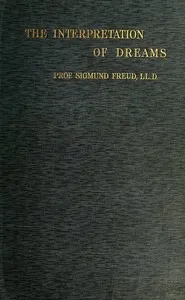
Dream Psychology: Psychoanalysis for Beginners
- Language
- EN
- Format
- EPUB
- Size
- 201 KB
Description
"Dream Psychology: Psychoanalysis for Beginners" introduces the concept that dreams function as expressions of unconscious desires and internal conflicts. Sigmund Freud discusses how the interpretation of dreams can reveal psychological truths, emphasizing their significance in understanding the human mind. The work presents an overview of Freudian theories, including the idea that dreams serve as wish fulfilments and are often symbolic representations of suppressed thoughts. Published in the early 20th century, the book addresses initial skepticism from the medical community and underscores the role of dream analysis within psychoanalytic practice. It provides foundational insight into Freud’s approach, aimed at a general audience seeking to grasp the basic principles of psychoanalysis and its methods, especially in relation to sleep and unconscious processes.
The volume is part of Freud's early efforts to popularise psychoanalytic ideas and their applications in psychiatry and psychology during the period. It reflects the scientific and clinical context of the early twentieth century when psychoanalysis was emerging as a new approach in mental health treatment.
The volume is part of Freud's early efforts to popularise psychoanalytic ideas and their applications in psychiatry and psychology during the period. It reflects the scientific and clinical context of the early twentieth century when psychoanalysis was emerging as a new approach in mental health treatment.
From the opening pages
"Psychoanalysis and Behavior" and "Psychoanalysis, Sleep and Dreams" NEW YORK THE JAMES A. McCANN COMPANY 1920 THE JAMES A. McCANN COMPANY PRINTED IN THE U.S.A. INTRODUCTION The medical profession is justly conservative. Human life should not be considered as the proper material for wild experiments. Conservatism, however, is too often a welcome excuse for lazy minds, loath to adapt themselves to fast changing conditions. Remember the scornful reception which first was accorded to Freud's discoveries in the domain of the unconscious. When after years of patient observations, he finally decided to appear before medical bodies to tell them modestly of some facts which always recurred in his dream and his patients' dreams, he was first laughed at and then avoided as a crank. The words "dream interpretation" were and still are indeed fraught with unpleasant, unscientific associations. They remind one of all sorts of childish, superstitious notions, which make up the thread and woof of dream books, read by none but the ignorant and the primitive. The wealth of detail, the infinite care never to let anything pass unexplained, with which he presented to the public the result of his investigations, are impressing more and more serious-minded scientists, but the examination of his evidential data demands arduous work and presupposes an absolutely open mind. This is why we still encounter men, totally unfamiliar with Freud's writings, men who were not even interested enough in the subject to attempt an interpretation of their dreams or their patients' dreams, deriding Freud's theories and combatting them with the help of statements which he never made. Some of them, like Professor Boris Sidis, reach at times conclusions which are strangely similar to Freud's, but in their ignorance of psychoanalytic literature, they fail to credit Freud for observations antedating theirs. Besides those who sneer at dream study, because they have never looked into the subject, there are those who do not dare to face the facts revealed by dream study. Dreams tell us many an unpleasant biological truth about ourselves and only very free minds can thrive on such a diet. Self-deception is a plant which withers fast in the pellucid atmosphere of dream investigation. The weakling and the neurotic attached to his neurosis are not anxious to turn such a powerful searchlight upon the dark corners of their psychology. Freud's theories are anything but theoretical. He was moved by the fact that there always…
Ask about this book
An AI guide answers your questions about this title
FAQ
Is "Dream Psychology: Psychoanalysis for Beginners" free to download?
Yes, it is free to download — no sign up needed.
What format is the file?
EPUB.
More by Sigmund Freud






Similar books





Reader reviews Be the first
No reviews yet. Be the first to review this book.
Write a review
Protected by reCAPTCHA.