
Your download link has expired — please click the download button again.
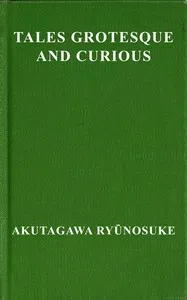
Tales grotesque and curious
- Language
- EN
- Format
- EPUB
- Size
- 532 KB
Description
Ryūnosuke Akutagawa's "Tales grotesque and curious" features a collection of early 20th-century Japanese short stories that examine themes of vanity, faith, survival, and hypocrisy. The stories are characterised by their dark humour, moral parables, and often ironic endings, set against diverse backgrounds ranging from medieval Kyoto to early modern Japan and China. The characters include monks, professors, servants, thieves, and devils, each engaging with the moral and social questions of their times. The collection reflects Akutagawa's meticulous craftsmanship and his interest in historical materials, providing a glimpse into Japanese society and its values during a period of cultural change. The stories are noted for their refined yet unsettling tone, illustrating the complexities of human nature through reimagined historical and mythological figures.
The collection begins with a translator’s introduction that discusses Akutagawa’s life in Tokyo, his influences, and the reception of his work, setting the context for the stories within. Published in the early 20th century, these stories exemplify Akutagawa’s mastery of short fiction and his enduring interest in moral and philosophical questions rooted in Japanese tradition.
The collection begins with a translator’s introduction that discusses Akutagawa’s life in Tokyo, his influences, and the reception of his work, setting the context for the stories within. Published in the early 20th century, these stories exemplify Akutagawa’s mastery of short fiction and his enduring interest in moral and philosophical questions rooted in Japanese tradition.
From the opening pages
Akutagawa Ryūnosuke was born in Tōkyō on the first day of March, 1892, and drank poison and died in Tōkyō early on the morning of July 24, 1927. Of the thirty-five years of his life, lived almost entirely in that same Tōkyō, he spent some eighteen mostly in school as a young prodigy and some eleven mostly at his desk as the fashioner and polisher of perhaps 200 over-wrought short stories, of which this book contains eleven, translated into English as nearly word for word as possible. His father, a man named Niihara Toshizō, is said to have given him the name Ryūnosuke (Dragon-helper) because he was born at the dragon hour on a dragon day in the dragon month of a dragon year. But his father’s part in the story ends there. His mother was unwell, and he was given in infancy, in the Japanese way, to her childless elder brother, Akutagawa Shōdō. His adoptive mother’s great uncle is reported to have been a man of fashion in the latter days of the old Edo period, but beyond this very frail hint, no home influence has been suggested as contributing to his genius. When in the third year of primary school, bright young Ryūnosuke picked up Tokutomi Roka’s book of sketches, Shizen to Jinsei (Nature and Man) and read it with a pleasure that is said to have turned him to literature. He went into the First High School in Tōkyō on recommendation without examination, passed through the school an honor student and entered the Imperial University of Tōkyō, where he studied English literature, graduating in 1916. His graduation thesis was entitled, Wiriamu Morisu Kenkyū (A Study of William Morris). He was like Morris in his surrender to the fascination of the Middle Ages, but he had none of the practical reforming tendencies of that artist socialist. He has been more aptly compared to Flaubert for the seriousness with which he took his art and the preciousness of his style. And the post-bellum point of view has been expressed by a Japanese social worker who, at his death, compared him, as a man with a keen sense of humor and knowledge of human nature and “an arbiter of elegance in the vicious society in which he lived,” to Petronius. He says of himself while at the University that he did not attend
FAQ
Is "Tales grotesque and curious" free to download?
Yes, it is free to download — no sign up needed.
What format is the file?
EPUB.
Similar books
Reader reviews Be the first
No reviews yet. Be the first to review this book.
Write a review
Protected by reCAPTCHA.