
Your download link has expired — please click the download button again.
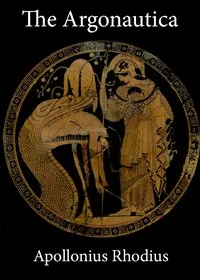
The Argonautica
- Language
- EN
- Format
- EPUB
- Size
- 328 KB
Description
The Argonautica is an epic poem composed in the 3rd century BC by the Greek poet Apollonius Rhodius. It recounts the voyage of Jason and the Argonauts as they seek to retrieve the Golden Fleece from Colchis. The narrative describes their heroic exploits and encounters with various mythological figures, highlighting the significance of divine intervention and heroism within Greek mythology. The poem also emphasizes Jason’s complex relationship with Medea, a Colchian princess and sorceress, exploring themes of love, loyalty, and treachery.
This work exemplifies Hellenistic poetry, combining elements of Homeric tradition with scholarly inquiry into geography, ethnography, and religion. Apollonius’s approach reflects a more introspective and emotionally nuanced storytelling style, setting it apart from earlier epic conventions. The poem’s influence extended into later literary and scholarly traditions, contributing to the development of narrative poetry in the ancient Greek world.
This work exemplifies Hellenistic poetry, combining elements of Homeric tradition with scholarly inquiry into geography, ethnography, and religion. Apollonius’s approach reflects a more introspective and emotionally nuanced storytelling style, setting it apart from earlier epic conventions. The poem’s influence extended into later literary and scholarly traditions, contributing to the development of narrative poetry in the ancient Greek world.
From the opening pages
Originally written in Ancient Greek sometime in the 3rd Century B.C. by the Alexandrian poet Apollonius Rhodius (“Apollonius the Rhodian”). Translation by R.C. Seaton, 1912. SELECTED BIBLIOGRAPHY: ORIGINAL TEXT— Seaton, R.C. (Ed. & Trans.): “Apollonius Rhodius: Argonautica” (Harvard University Press, Cambridge MA, 1912). Original Greek text with side-by-side English translation. OTHER TRANSLATIONS— Rieu, E.V. (Trans.): “Apollonius of Rhodes: The Voyage of the Argo” (Penguin Classics, London, 1959, 1971). RECOMMENDED READING— Euripides: “Medea”, “Hecabe”, “Electra”, and “Heracles”, translated by Philip Vellacott (Penguin Classics, London, 1963). Contains four plays by Euripides, two of which concern characters from “The Argonautica”. Contents INTRODUCTION THE ARGONAUTICA ENDNOTES INTRODUCTION Much has been written about the chronology of Alexandrian literature and the famous Library, founded by Ptolemy Soter, but the dates of the chief writers are still matters of conjecture. The birth of Apollonius Rhodius is placed by scholars at various times between 296 and 260 B.C., while the year of his death is equally uncertain. In fact, we have very little information on the subject. There are two “lives” of Apollonius in the Scholia, both derived from an earlier one which is lost. From these we learn that he was of Alexandria by birth, [1] that he lived in the time of the Ptolemies, and was a pupil of Callimachus; that while still a youth he composed and recited in public his Argonautica , and that the poem was condemned, in consequence of which he retired to Rhodes; that there he revised his poem, recited it with great applause, and hence called himself a Rhodian. The second “life” adds: “Some say that he returned to Alexandria and again recited his poem with the utmost success, so that he was honoured with the libraries of the Museum and was buried with Callimachus.” The last sentence may be interpreted by the notice of Suidas, who informs us that Apollonius was a contemporary of Eratosthenes, Euphorion and Timarchus, in the time of Ptolemy Euergetes, and that he succeeded Eratosthenes in the headship of the Alexandrian Library. Suidas also informs us elsewhere that Aristophanes at the age of sixty-two succeeded Apollonius in this office. Many modern scholars deny the “bibliothecariate” of Apollonius for chronological reasons, and there is considerable difficulty about it. The date of Callimachus’ Hymn to Apollo , which closes with some lines (105-113) that are admittedly an allusion to Apollonius, may be put with much probability at…
Ask about this book
An AI guide answers your questions about this title
FAQ
Is "The Argonautica" free to download?
Yes, it is free to download — no sign up needed.
What format is the file?
EPUB, about 328 KB.
More by Rhodius Apollonius

Similar books




Reader reviews Be the first
No reviews yet. Be the first to review this book.
Write a review
Protected by reCAPTCHA.