
Your download link has expired — please click the download button again.
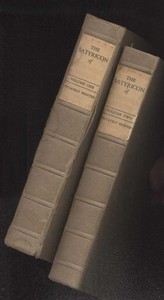
The Satyricon — Complete
- Language
- EN
- Format
- EPUB
- Size
- 3.8 MB
Description
The narrative centers on Encolpius, a Roman of uncertain social standing, who recounts a series of unconventional and often bawdy adventures across early Imperial Rome. The work combines prose and verse to depict encounters with eccentric characters, provocative situations, and satirical portrayals of Roman society. Prominent among these episodes is a dinner hosted by Trimalchio, a wealthy and vulgar freedman, which satirises social ambition and decadence. The novel's content reflects the licentiousness, social stratification, and moral ambiguities characteristic of the period. As a fragmentary Latin text from the late 1st century AD, it offers insight into the attitudes, humour, and literary styles of early Roman literature. Its plot structure is episodic, highlighting various encounters that exemplify the work's satirical and darkly comic tone.
The novel raises questions about morality, social pretension, and human nature within the context of ancient Roman society.
The novel raises questions about morality, social pretension, and human nature within the context of ancient Roman society.
From the opening pages
Complete and unexpurgated translation by W. C. Firebaugh, in which are incorporated the forgeries of Nodot and Marchena, and the readings introduced into the text by De Salas. PREFACE Among the difficulties which beset the path of the conscientious translator, a sense of his own unworthiness must ever take precedence; but another, scarcely less disconcerting, is the likelihood of misunderstanding some allusion which was perfectly familiar to the author and his public, but which, by reason of its purely local significance, is obscure and subject to the misinterpretation and emendation of a later generation. A translation worthy of the name is as much the product of a literary epoch as it is of the brain and labor of a scholar; and Melmouth’s version of the letters of Pliny the Younger, made, as it was, at a period when the art of English letter writing had attained its highest excellence, may well be the despair of our twentieth century apostles of specialization. Who, today, could imbue a translation of the Golden Ass with the exquisite flavor of William Adlington’s unscholarly version of that masterpiece? Who could rival Arthur Golding’s rendering of the Metamorphoses of Ovid, or Francis Hicke’s masterly rendering of Lucian’s True History? But eternal life means endless change and in nothing is this truth more strikingly manifest than in the growth and decadence of living languages and in the translation of dead tongues into the ever changing tissue of the living. Were it not for this, no translation worthy of the name would ever stand in need of revision, except in instances where the discovery and collation of fresh manuscripts had improved the text. In the case of an author whose characters speak in the argot proper to their surroundings, the necessity for revision is even more imperative; the change in the cultured speech of a language is a process that requires years to become pronounced, the evolution of slang is rapid and its usage ephemeral. For example Stephen Gaselee, in his bibliography of Petronius, calls attention to Harry Thurston Peck’s rendering of “bell um pomum” by “he’s a daisy,” and remarks, appropriately enough, “that this was well enough for 1898; but we would now be more inclined to render it “he’s a peach.” Again, Peck renders “illud erat vivere” by “that was life,” but, in the words of our lyric American jazz, we would be more inclined to…
FAQ
Is "The Satyricon — Complete" free to download?
Yes, it is free to download — no sign up needed.
What format is the file?
EPUB.
More by Petronius Arbiter
Similar books



Reader reviews Be the first
No reviews yet. Be the first to review this book.
Write a review
Protected by reCAPTCHA.