
Your download link has expired — please click the download button again.
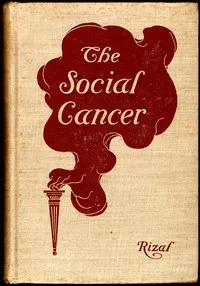
The Social Cancer: A Complete English Version of Noli Me Tangere
by José Rizal
- Language
- EN
- Format
- EPUB
- Size
- 558 KB
Description
The novel centres on Crisóstomo Ibarra, a young Filipino returning from Europe during the Spanish colonial period. The narrative examines his efforts to modernise his community through the establishment of a school, against the backdrop of widespread social injustices. As Ibarra encounters resistance from Spanish authorities and friars, the work exposes the corruption, abuse of power, and social inequalities endemic to the period. Set in the late 19th century, the story offers a critique of colonial domination and the complicity of religious figures in systemic oppression.
Published in 1887, the novel is classified as a historical novel and is notable for its political themes and social commentary. It reflects the intellectual ferment among Filipinos during Spanish rule, highlighting issues of justice, national identity, and resistance. The English translation by Charles Derbyshire, based on the original Spanish text by José Rizal, aims to make these themes accessible to a broader readership.
Published in 1887, the novel is classified as a historical novel and is notable for its political themes and social commentary. It reflects the intellectual ferment among Filipinos during Spanish rule, highlighting issues of justice, national identity, and resistance. The English translation by Charles Derbyshire, based on the original Spanish text by José Rizal, aims to make these themes accessible to a broader readership.
From the opening pages
A Complete English Version of Noli Me Tangere from the Spanish of José Rizal By Charles Derbyshire Manila Philippine Education Company New York: World Book Company 1912 THE NOVELS OF JOSÉ RIZAL Translated from Spanish into English BY CHARLES DERBYSHIRE THE SOCIAL CANCER (NOLI ME TANGERE) THE REIGN OF GREED (EL FILIBUSTERISMO) Copyright, 1912, by Philippine Education Company. Entered at Stationers’ Hall. Registrado en las Islas Filipinas . All rights reserved . Translator’s Introduction I “We travel rapidly in these historical sketches. The reader flies in his express train in a few minutes through a couple of centuries. The centuries pass more slowly to those to whom the years are doled out day by day. Institutions grow and beneficently develop themselves, making their way into the hearts of generations which are shorter-lived than they, attracting love and respect, and winning loyal obedience; and then as gradually forfeiting by their shortcomings the allegiance which had been honorably gained in worthier periods. We see wealth and greatness; we see corruption and vice; and one seems to follow so close upon the other, that we fancy they must have always co-existed. We look more steadily, and we perceive long periods of time, in which there is first a growth and then a decay, like what we perceive in a tree of the forest.” FROUDE, Annals of an English Abbey . Monasticism’s record in the Philippines presents no new general fact to the eye of history. The attempt to eliminate the eternal feminine from her natural and normal sphere in the scheme of things there met with the same certain and signal disaster that awaits every perversion of human activity. Beginning with a band of zealous, earnest men, sincere in their convictions, to whom the cause was all and their personalities nothing, it there, as elsewhere, passed through its usual cycle of usefulness, stagnation, corruption, and degeneration. To the unselfish and heroic efforts of the early friars Spain in large measure owed her dominion over the Philippine Islands and the Filipinos a marked advance on the road to civilization and nationality. In fact, after the dreams of sudden wealth from gold and spices had faded, the islands were retained chiefly as a missionary conquest and a stepping-stone to the broader fields of Asia, with Manila as a depot for the Oriental trade. The records of those early years are filled with tales of courage…
FAQ
Is "The Social Cancer: A Complete English Version of Noli Me Tangere" free to download?
Yes, it is free to download — no sign up needed.
What format is the file?
EPUB.
More by José Rizal



Similar books




Reader reviews Be the first
No reviews yet. Be the first to review this book.
Write a review
Protected by reCAPTCHA.