
Your download link has expired — please click the download button again.

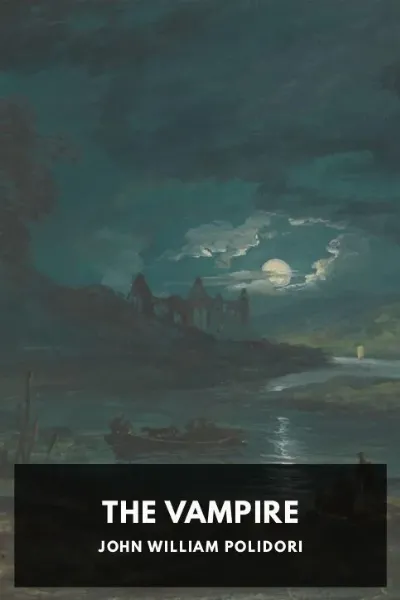
The Vampyre; a Tale
- Language
- EN
- Format
- EPUB
- Size
- 101 KB
Description
Published in 1819, "The Vampyre; a Tale" is a short prose work that narrates the experiences of Aubrey during his travels across Europe. The story begins with Aubrey's introduction to Lord Ruthven, a charismatic and enigmatic nobleman whose presence influences those around him. As their acquaintance develops, Ruthven's sinister nature gradually becomes apparent through his disturbing actions and associations. The narrative reveals Ruthven's predatory behaviour, rooted in aristocratic privilege, and explores themes of deception, morality, and the supernatural. When Aubrey uncovers the true identity and intentions of Ruthven, he faces moral dilemmas compounded by a vow that prevents him from warning others.
This work is a notable example of early 19th-century British literature, contributing to the development of the vampire myth in Western fiction. Polidori's portrayal of the vampire as an aristocratic figure marks a departure from traditional folklore, shaping subsequent representations of the creature in popular culture. The narrative blends elements of Gothic horror with social commentary on the privileged classes of the period.
This work is a notable example of early 19th-century British literature, contributing to the development of the vampire myth in Western fiction. Polidori's portrayal of the vampire as an aristocratic figure marks a departure from traditional folklore, shaping subsequent representations of the creature in popular culture. The narrative blends elements of Gothic horror with social commentary on the privileged classes of the period.
From the opening pages
"I breathe freely in the neighbourhood of this lake; the ground upon which I tread has been subdued from the earliest ages; the principal objects which immediately strike my eye, bring to my recollection scenes, in which man acted the hero and was the chief object of interest. Not to look back to earlier times of battles and sieges, here is the bust of Rousseau—here is a house with an inscription denoting that the Genevan philosopher first drew breath under its roof. A little out of the town is Ferney, the residence of Voltaire; where that wonderful, though certainly in many respects contemptible, character, received, like the hermits of old, the visits of pilgrims, not only from his own nation, but from the farthest boundaries of Europe. Here too is Bonnet's abode, and, a few steps beyond, the house of that astonishing woman Madame de Stael: perhaps the first of her sex, who has really proved its often claimed equality with, the nobler man. We have before had women who have written interesting novels and poems, in which their tact at observing drawing-room characters has availed them; but never since the days of Heloise have those faculties which are peculiar to man, been developed as the possible inheritance of woman. Though even here, as in the case of Heloise, our sex have not been backward in alledging the existence of an Abeilard in the person of M. Schlegel as the inspirer of her works. But to proceed: upon the same side of the lake, Gibbon, Bonnivard, Bradshaw, and others mark, as it were, the stages for our progress; whilst upon the other side there is one house, built by Diodati, the friend of Milton, which has contained within its walls, for several months, that poet whom we have so often read together, and who—if human passions remain the same, and human feelings, like chords, on being swept by nature's impulses shall vibrate as before—will be placed by posterity in the first rank of our English Poets. You must have heard, or the Third Canto of Childe Harold will have informed you, that Lord Byron resided many months in this neighbourhood. I went with some friends a few days ago, after having seen Ferney, to view this mansion. I trod the floors with the same feelings of awe and respect as we did, together, those of Shakespeare's dwelling at Stratford. I…
FAQ
Is "The Vampyre; a Tale" free to download?
Yes, it is free to download — no sign up needed.
What format is the file?
EPUB.
More by John William Polidori
Similar books


Reader reviews Be the first
No reviews yet. Be the first to review this book.
Write a review
Protected by reCAPTCHA.