
Your download link has expired — please click the download button again.
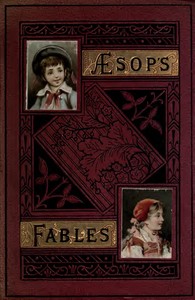
Three hundred Aesop’s fables: Translated by George Fyler Townsend
by Aesop
- Language
- EN
- Format
- EPUB
- Size
- 588 KB
Description
This collection of three hundred fables compiles stories attributed to Aesop, who is believed to have lived between 620 and 564 BCE. The stories originate from ancient oral traditions and have been collected over centuries from various cultural sources. The fables involve anthropomorphic animals, plants, and humans, often illustrating moral lessons through simple, concise narratives. Many of these tales are designed to provide ethical guidance and social commentary, with morals frequently expressed at their conclusion. The stories reflect ancient values and beliefs, serving as didactic tools for instruction across generations.
Translated by George Fyler Townsend, the book presents these fables in English, making them accessible to a wider audience in the 19th century. The work preserves the original brevity and straightforward style of the tales, which have had a significant influence on moral education and literary tradition. As a collection of classical literature, it exemplifies narrative methods used to teach virtue and wisdom through engaging, allegorical storytelling.
Translated by George Fyler Townsend, the book presents these fables in English, making them accessible to a wider audience in the 19th century. The work preserves the original brevity and straightforward style of the tales, which have had a significant influence on moral education and literary tradition. As a collection of classical literature, it exemplifies narrative methods used to teach virtue and wisdom through engaging, allegorical storytelling.
From the opening pages
The Tale, the Parable, and the Fable are all common and popular modes of conveying instruction. Each is distinguished by its own special characteristics. The Tale consists simply in the narration of a story either founded on facts, or created solely by the imagination, and not necessarily associated with the teaching of any moral lesson. The Parable is the designed use of language purposely intended to convey a hidden and secret meaning other than that contained in the words themselves; and which may or may not bear a special reference to the hearer, or reader. The Fable partly agrees with, and partly differs from both of these. It will contain, like the Tale, a short but real narrative; it will seek, like the Parable, to convey a hidden meaning, and that not so much by the use of language, as by the skilful introduction of fictitious characters; and yet, unlike to either Tale or Parable, it will ever keep in view, as its high prerogative, and inseparable attribute, the great purpose of instruction, and will necessarily seek to inculcate some moral maxim, social duty, or political truth. The true Fable, if it rise to its high requirements, ever aims at one great end and purpose—the representation of human motive, and the improvement of human conduct, and yet it so conceals its design under the disguise of fictitious characters, by clothing with speech the animals of the field, the birds of the air, the trees of the wood, or the beasts of the forest, that the reader shall receive advice without perceiving the presence of the adviser. Thus the superiority of the counsellor, which often renders counsel unpalatable, is kept out of view, and the lesson comes with the greater acceptance when the reader is led, unconsciously to himself, to have his sympathies enlisted in behalf of what is pure, honourable, and praiseworthy, and to have his indignation excited against what is low, ignoble, and unworthy. The true fabulist, therefore, discharges a most important function. He is neither a narrator, nor an allegorist. He is a great teacher, a corrector of morals, a censor of vice, and a commender of virtue. In this consists the superiority of the Fable over the Tale or the Parable. The fabulist is to create a laugh, but yet, under a merry guise, to convey instruction. Phædrus, the great imitator of Æsop, plainly indicates this
FAQ
Is "Three hundred Aesop’s fables: Translated by George Fyler Townsend" free to download?
Yes, it is free to download — no sign up needed.
What format is the file?
EPUB.
More by Aesop


Similar books



Reader reviews Be the first
No reviews yet. Be the first to review this book.
Write a review
Protected by reCAPTCHA.